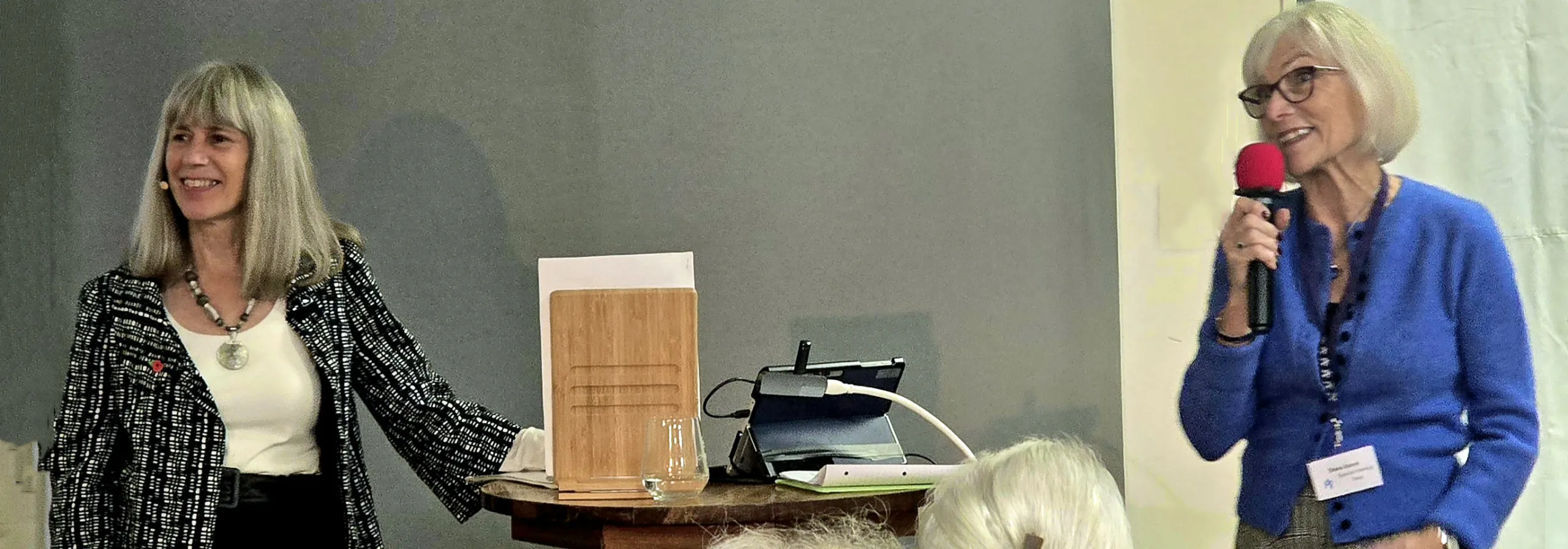
A metaphorical walk through British sculptures led us through the thinking of Antony Gormley & sculpture as it exists in the public realm.
1. From Jacob Epstein to the Geometry of Fear
The history of sculpture dates back to Ancient Greece, its longevity ascribed to the fact that it uses hard materials, first stone and then bronze. Until the early 20th century this was the style of all sculptures and examples are found in the work of Frederick Lord Leighton in the Royal Academy and on the three plinths in Trafalgar Square. Often these figures become ‘invisible’ and although most of us will have walked past those Trafalgar Square worthies, few of us would be able to name them.
A complete revolution in sculpture arrived with Jacob Epstein, an American who went first to Paris, where he met Rodin, and later became British. Rodin was already moving away from the classical tradition towards greater naturalism and put emotion to the fore.
Epstein was much influenced by non-Western art which was very controversial. His enormous sculptures on the BMA building on the Strand, were deemed to be too ’foreign’ for this prominent location. Bits fell off, to add to the public consternation, and when Epstein and Eric Gill were commissioned to adorn London Underground offices at 55 Broadway, an inch and a half was removed from the face of their sculptures to eliminate all protuberances and perceived danger.
A young Henry Moore, who greatly admired Epstein, was invited to provide one of the sculptures for this building, and all can still be seen today. Rather than copying from a plaster model, Moore carved directly onto stone, which he carefully sourced for its particular properties for each commission from all over the country for its particular properties. He got to know and admired Picasso and the resemblance between Picasso’s ‘broken’ reclining cubist figures and those of Henry Moore was clearly evident in Anna’s excellent slides.
The 1936 International Surrealist Exhibition in London, which included Moore and Constantin Brancusi introduced a new ‘strangeness’ to the depiction of the body. In 1948 Britain held its first outdoor sculpture exhibition, in Battersea Park, supported by the LCC and including Epstein, Rodin and Moore as well as Barbara Hepworth.
Family groups and Mother and Child figures became popular, indicators of stability after the trauma of war. Bronze casting often had the addition of chemicals to give patina and colour. These sculptures could be safely placed outdoors and bronze casting meant that more than one could be made of any subject. Epstein became known to a wider public through his St. Michael and the Devil (1957) on Coventry Cathedral, rebuilt after the war.
Barbara Hepworth and Henry Moore, both from Leeds, were friends and rivals. Whilst Moore’s style was more Surrealist, she was more abstract and by 1931 she had discovered the idea of ‘negative space’ (the hole) already evident in Europe. She often depicted groups of three, perhaps influenced by her own triplets, and she relied on basic forms and shapes, circles and squares and abstracts with no defined features, just human.
By the early 1950s the Cold War loomed and the style of sculpture changed to reflect these disturbed times and sense of anxiety. Eight British sculptors exhibited at the Venice Biennale in 1952, breaking away from the smooth styles of Hepworth and Moore to jagged, spiky, angular and rough textured forms representing despair, flight and defiance. The term The Geometry of Fear was coined by the writer of the catalogue for the exhibition.
2. The Body as Place
An admirer of Epstein, Antony Gormley also looked East for inspiration and indeed nearly became a monk after a sojourn in India and Sri Lanka. Our lecturer had known him from their University days and has written two books about him.
Antony Gormley moved away from the abstract styles that preceded him and looked at the body, investigating it beyond the remit of art. He looks at the relationship between the body and space and more latterly our place in the Universe.Many of his cast iron and steel sculptures use his own body as a cast.
This session looked at his most well known pieces, including the Angel of the North, placed on the site of an old colliery and often despised until a Kevin Keegan football shirt was put on it, since when it has become a cherished icon of the UK.
3. Fresh Encounters
In the latter decades of the 20th century there was a drive to put Sculptures in Cities, often to meet planning permission requirements and frequently lacking any connection with the place. This was the case for the LCC trying to enliven parts of London. These efforts were frequently resisted by locals as was the case for ‘Seated Draped Woman’ by Henry Moore (1966). Derided originally, she became much loved and was nicknamed old Flo by the residents of an estate in East London where she was first positioned. When the estate was pulled down, after a safekeeping stay at the Yorkshire Sculpture Park, she was reinstated at Canary Wharf. Worth £20 million now, the LCC’s £7000 investment certainly paid off.
Later years have seen sculptures with greater site specificity with sculptors involved from the beginning of the project, as at the Home Office, where sculpture and architecture are integrated and Heathrow’s Terminal Five, where passengers are part of the sculpture. Yayoi Kusama’s enormous work, Infinite Accumulation (2024), outside Liverpool Street station commemorates the completion of Crossrail and celebrates the connectivity between humans.
As we have noted, Sculpture Parks began in Battersea ,which aimed to cheer people up, as indeed they continue to do. We were recommended, if travelling in Europe, to visit the Kroller Muller museum in Otterlo, Netherlands for its sculpture garden and gallery with Van Gogh paintings.
We went on to explore Land Art and sculpture from found materials, neither of which will last forever and only remain in the photographs taken at the time of their construction.
Sculpture on the Waterfront encouraged us to discover the wealth of sculpture in Folkestone, where there is our own vision of the Copenhagen mermaid as well as one of Antony Gormley’s Another Time series. In addition every three years (2028 next), around 20 artworks are commissioned in response to Folkestone’s rich coastal landscape for the Folkestone Triennial - the largest event of its kind in the UK.
Landmark Sites for sculptures, looked at examples such as Louise Bourgeois’ spider at the Guggenheim in Bilbao, and more sensationally, Thomas Heatherwick’s B of the Bang for Manchester City’s Etihad stadium which had to be taken down as its size proved unstable. The Angel of the North has fared better!
Finally we considered how the placement of sculptures can encourage debate, as in the case of Edward Colston in Bristol, and encounters such as in New York where sculptures have been judiciously placed to encourage social interaction.
Our Speaker Anna Moszynska
Anna is a distinguished academic who pioneered the study of contemporary art at Sotheby’s Institute. Her expertise and engaging style make her one of the most sought-after lecturers in the field. Anna is a lecturer and writer specialising in contemporary art. During the 1990s, she oversaw the development of the subject as the first Master’s Degree at Sotheby’s Institute. She has also taught at other institutions in London including The City Lit, the Royal Academy and Tate, as well as lecturing in cities ranging from Dubai to New York and Berlin to Sydney.
She continues to offer guest lectures on the Sotheby’s Institute MA in Contemporary Art.
Apart from the many catalogue essays she has written on living artists, many of whom are women, her books include Abstract Art (1990, enlarged ed. 2020) and Sculpture Now (2013), both published by Thames & Hudson, and two books on the drawings of Antony Gormley, whose work she has curated at MACRO, the Museum of Contemporary Art in Rome.
TASH Study Day Report by Diana Jones on Sculpture from Epstein to Emin by Anna Moszynska, November 5th 2026
Published on: November 19, 2026
Published By Society: Henley-on-Thames


