Steve King has spent 35 years working in the radio industry as a Broadcaster, Programmer and Events Director. He has managed some of the biggest radio brands in the UK and has interviewed and worked with many well-known popular music artists. He has also directed over 50 multi-artist events at venues including the Royal Albert Hall, London Palladium and Manchester Arena. His work in the broadcasting industry has been recognised on numerous occasions. He has lectured at various media conferences, industry events and for several cruise lines. In May 2026, Steve delivered the Special Interest Day at The Arts Society Henley (TASH).
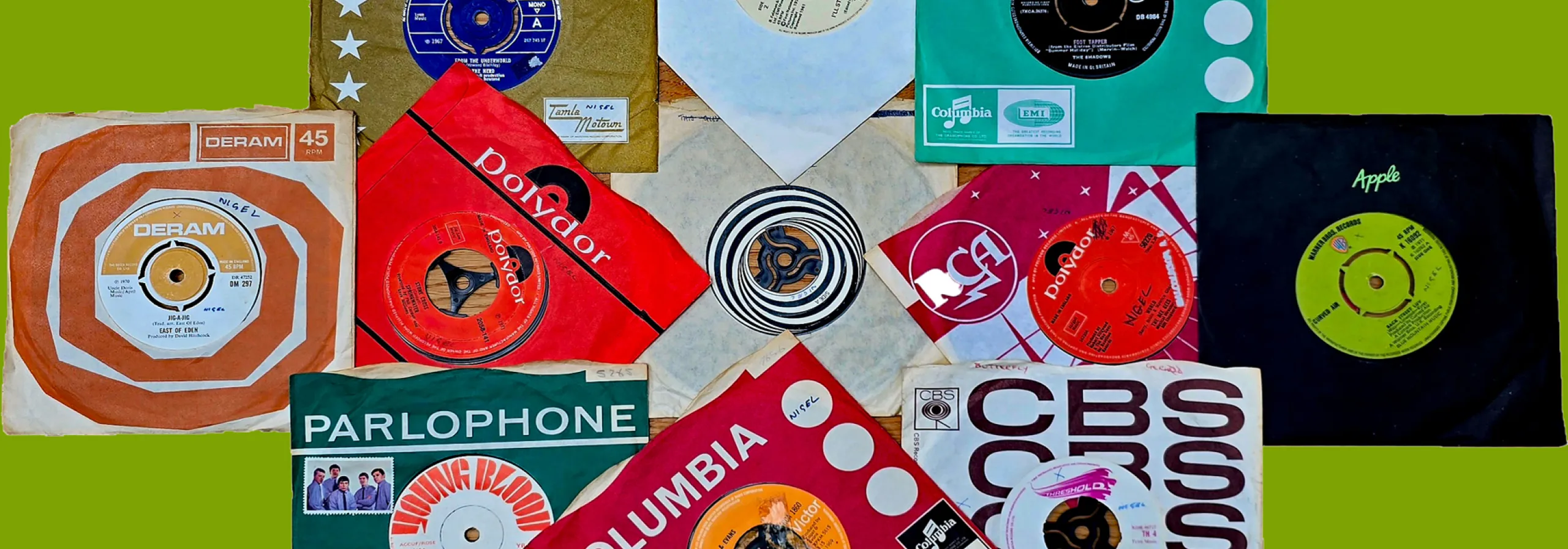
Dividing the 60s into three distinct year groups, Steve set popular music into historical context and clarified what the main influences on it were, whilst entertaining us with a feast of nostalgia, through multiple musical clips and excellent graphics.
1. She Loves You 1960-63
In 1948 vinyl records were introduced, making records cheaper and the sound better. The electric guitar allowed for a full sound from far fewer musicians, whilst record players ( remember the Dansette?) and battery operated radios became available to a new demographic. The Baby Boomers after the war had become teenagers and with no National Service and more money for leisure, a new audience was born. The club scene developed, most particularly in Liverpool.
When the Beatles formed in 1960, Elvis was well established with 9 Number Ones in the UK in just two years. After a stint as a GI he returned with a wider vocal range and successfully broadened his career from his original genre starring in many films. Only Elvis was bigger than the Everly Brothers, who mixed in country music. Together they influenced many others.
In the UK Cliff Richard followed the same pattern starting out with rock, then films and then a softer style. Backed by the Shadows (20 Top Ten hits) they showed that instrumentals could top the charts, though the first million seller instrumental was Acker Bilk’s Stranger on the Shore (1962). At the root of Rock’n’Roll in the UK was skiffle, led by Lonnie Donegan.
But American pop was king in the early 60s, even when sung by Brits, and 70% of the best sellers were by male soloists. Songs were written to order for established stars in writing hubs like The Brill Building in New York (Jerry Goffin and Carole King, Lieber and Stoller, Burt Bacharach etc) . Meanwhile in Michigan R and B was being added to the mix with Berry Gordi creating Motown.
Individuals like Bobby Vee and groups such as Peter, Paul and Mary, with their folk revival, were ‘manufactured pop’, with the record industry very much in control.
Technical improvements led to Phil Spector’s Wall of Sound and he was arguably the most important person in 60s music.
She Loves You in 1963 was the Beatles biggest hit and made them a sensation overnight, leading to Beatlemania. Like many of their songs it opened with the chorus as an immediate hook - no introduction. It was ‘like throwing a switch’ and a string of bands followed, especially in Liverpool. Lennon and McCartney demonstrated the advantages of writing your own material and the balance of power in the industry switched. Music developed organically, heavily influenced by Motown, Dylan and the Beatles.
2. Like a Rolling Stone 1964-66
By 1964 the Beatles had conquered the USA with 5 records in the US Top 5 at once. Other Brits followed, many managed by Brian Epstein and produced by George Martin. Motown introduced The Supremes, who rivalled The Beatles in the mid 60s. Women became more prominent including Dusty Springfield and Petula Clark whilst Easy Listening music, typified by Andy Williams, continued in parallel.
In 1965 The Rolling Stones, signed by Decca who had turned down the Beatles, had three Number Ones. Jagger and Richards set themselves up to write their own material and have more control, whilst manager Andrew Oldham cultivated their ‘scruffy’ image. In 1965 Bob Dylan had his first Number One, but by 1966 groups dominated the charts.
The practice of releasing singles first from upcoming albums declined, and in Rubber Soul every song was deemed to be ‘Very Good’ by Brian Wilson of the Beach Boys. Their own Pet Sounds had no ‘fillers’, and with every song ‘a work of art’ it achieved world wide fame. Good Vibrations was edited from 195 hours of recording and took 6 months.
The Beatles came back with Revolver but 29 August 1966 saw their last concert, with them becoming a studio band thereafter, taking advantage of new technology and appealing to a wider age group as their teenage fan base grew up.
3. Those were the days 1967-69
The surf culture was left behind with the arrival of The Summer of Love and Flower Power - psychedelic and progressive rock arrived with bands like Procol Harem. Pop music, often through manufactured bands like The Monkees, was left to younger audiences and rock (Jimi Hendrix for example) appealed to older audiences whilst album sales, providing better value, soared.
Sergeant Pepper’s Lonely Hearts Club Band gave birth to the concept album, designed to be listened to at one sitting ,and the first to have the lyrics printed on the sleeve. Simon and Garfunkel, though already well known, were catapulted to fame through the film The Graduate and the success of Motown encouraged black artists, amongst them Aretha Franklin with ‘I say a little prayer’ - a protest song against the Vietnam war. Through music they campaigned for social change and she was the first woman inducted into the Rock’n'Roll Hall of Fame.
The Hollies and Bee Gees wrote their own material and, moving away from a rather melancholy sound The Bee Gees went on to reinvent themselves in the 1970s leading to the birth of disco music. Motown, with a roster of artists, was a byword for a particular sound and for dance music, leading again to the world of 1970s disco.
By 1968 The Stones had replaced the Beatles and Elvis was back in Las Vegas and touring, as was Bob Dylan. After a period of absence he mixed country and rock music in 'Lay Lady Lay’.
The Beatles’ Abbey Road, arguably their best album, was their last time in the recording studios together. They had 6 out of the 10 best selling albums of the 1960s and 4 out of the 10 top singles (Elvis had 2). They broke up in 1970 but in 2023 Paul and Ringo produced an AI based record with all of the Beatles’ voices called ’Now and Then’ which again went to Number One. They remain the biggest selling artists in the world.
And by the end of the decade the UK had taken over from the USA as the world leader in popular music.
TASH Tutors report by Diana Jones on The music of the 1960s with Steve King, May 2026
Published on: May 27, 2026
Published By Society: Henley-on-Thames


