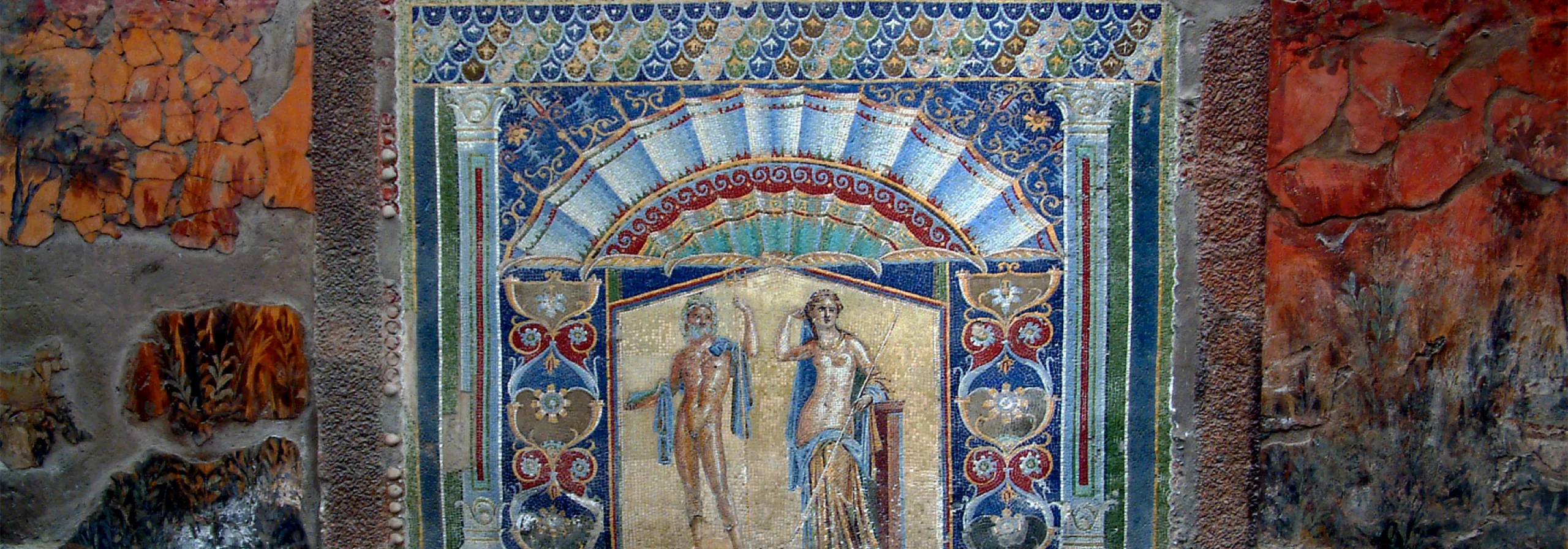
The eruption of Mount Vesuvius in 79 CE did more than freeze a moment in time - it sealed an entire Roman world and gave birth to archaeology.
Bringing 40 years of expertise from the University of London’s Institute of Archaeology to our stage, Stone will guide us through the opulent seaside retreats of the Roman elite - from the bustling commercial streets of Pompeii to the beautifully preserved coastal villas of Herculaneum and Oplontis.
Attendees: TASH Members & their Guests Only. Arrive early to enjoy drinks, lunch and great company.
Timings: Morning Lecture & Online @ 10:45 / Afternoon Lecture @ 14:15.
From Treasure Hunting to True Science
The dramatic eruption of Mount Vesuvius in 79 CE resulted in the towns of Pompeii, Herculaneum, Oplontis and many other smaller settlements and villas being preserved under the ash. While the tragedy of Vesuvius preserved incredible frescoes, intricate mosaics, and everyday household items under metres of volcanic ash and pumice, their modern awakening was far from careful. When these lost cities were rediscovered - sparked by heavy excavations starting in the 18th century - they became an open-air goldmine for royal collectors and private enthusiasts.
The staggering historical significance of these three towns lies in their diverse social structures, which together offer an unparalleled, 3D cross-section of ancient Roman life. Pompeii serves as the ultimate time capsule of a bustling, middle-class commercial hub, where remarkably preserved election graffiti, fast-food counters (thermopolia), and bakeries reveal the daily routines of ordinary citizens and tradespeople. In contrast, nearby Herculaneum was a wealthier, more educated coastal sanctuary, where the unique carbonisation process from the volcanic surge preserved fragile organic materials—such as wooden furniture, multi-story buildings, and a vast library of papyrus scrolls—that vanished entirely elsewhere. Finally, Oplontis provides an unmatched look at the pinnacle of imperial luxury, dominated by the monumental Villa Poppaea, whose grand architecture and stunningly complex wall paintings offer historians a direct blueprint of the opulent lifestyles led by Rome's most powerful ruling elite.
As Mike will highlight, early excavations prioritised prestige over preservation:
- The Fragmented Heritage: Exquisite wall paintings were brutally cut straight out of their architectural settings.
- Private Galleries: Masterpieces were carted away to private collections and exclusive royal museums, stripped entirely of their cultural context.
This destructive "treasure-hunting" approach eventually provoked fierce resistance from visiting Enlightenment scholars. Appalled by the loss of historical data, these early critics demanded systematic, respectful methods of recording and preservation. It was this pivotal debate that transformed a casual aristocratic hobby into a rigorous scientific discipline, marking the very first time the word 'archaeology' appeared in print.
About our Speaker: An Expert Guide to the Classical World
As a former museum curator and an active veteran of excavations across Italy, France, and the UK, Mike Stone is uniquely qualified to tell this story. Having taught heritage and classical civilisations at the Universities of Bristol, Bournemouth, and Bath, he is widely praised by Arts Societies across the country for his engaging, narrative-driven speaking style. Rather than focusing solely on cold facts, Stone blends a deep passion for Roman provincial art with an insider’s understanding of how modern archaeological science was born.
Whether you are planning a trip to the Amalfi Coast, fascinated by Roman history, or passionate about the preservation of fine art, this lecture offers a wonderful window into a world frozen by volcanic ash - and the historical revolution that brought it back to light.
TASH Talk - 18th November 2027: Ancient Roman Life and Art in the Bay of Naples with Mike Stone
Date: 18/11/2027 00:00
Location: The Clubhouse
Host: Henley-on-Thames


