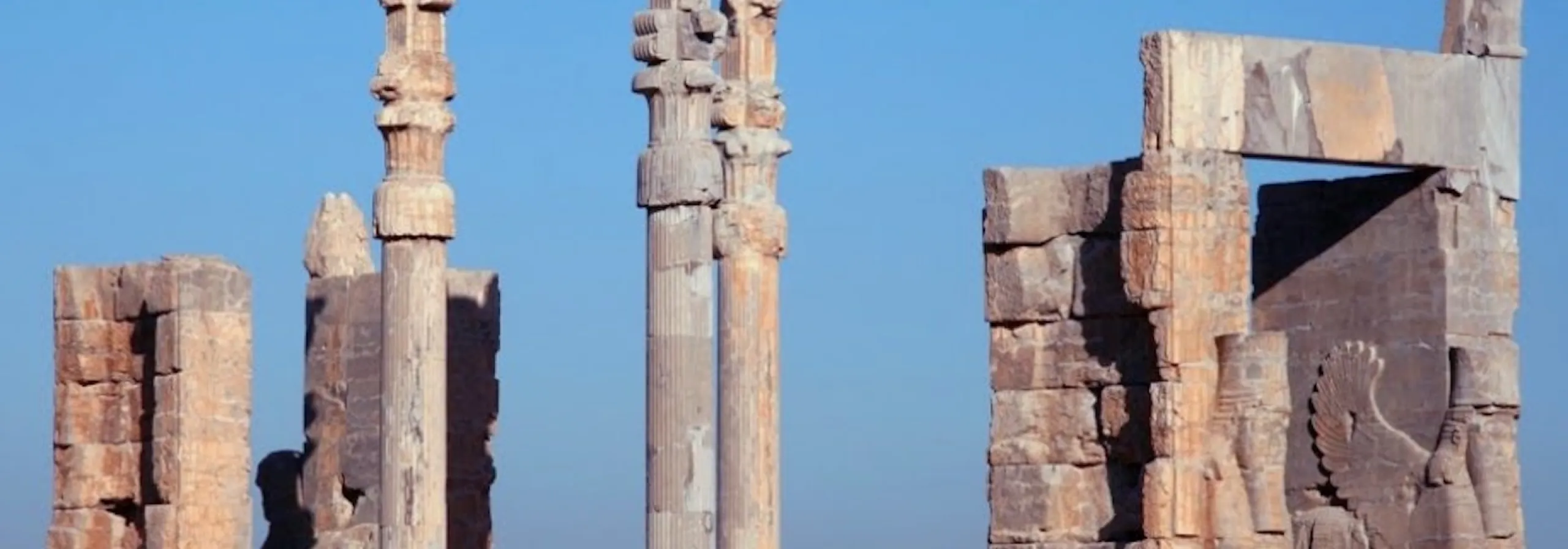
The Persian empire exploded into life during the middle of the 6th century BC and was the largest empire in the world for the next two centuries. It stretched from the Mediterranean in the west to the Indus valley in the east, from the Eurasian steppes in the north to Egypt and Arabia in the south. In around 515, its third Great King, Darius I, commissioned the building of a new city, Persepolis, with his palace at its centre. We know a great deal about this palace, and one of its central features, the Apadana Staircase, can be seen in replica in the British Museum. What can this palace and its art tell us about the ideology of this extraordinary and influential empire?
James Renshaw, our lecturer for the evening, was awarded a Classics degree from Oxford University. After graduation James has taught the classics at secondary schools as well as running an Ancient World Breakfast Club - this has an ethos similar to that of The Arts Society. Since 1998, James has published a number of textbooks related to the classical world, including In Search of the Greeks and In Search of the Romans. Alongside his teaching, James lectures for the V&A Academy as well as being an accredited lecturer for the Arts Society and been a Council Member for the Hellenic Society and the Roman Society. He is a keen traveller enabling him to take many photos of ancient sites, a number of which have been used in his books. James is currently working on a book due out in 2027 on the history of the marathon race. The Marathon: an Epic History seeks to chart how stories from the battle of Marathon in 490 BC led to a new 'marathon' event at the the first modern Olympics in 1896, and how this event has gone on to become a sporting craze.
Persepolis: art, architecture and ideology of the Persian Empire
Date: 19/04/2027 19:15 - 20:45
Location: Christ Church
Host: Nidd Valley
Contact Email: niddvalleyartssociety@gmail.com


